Cleaning Out a Parent's House in Orlando: Where to Start
The three clocks of an estate cleanout in Central Florida: who has authority, what the law protects, where things go and what our crew and dumpster cost.
Read the guideAfter a storm, three things happen in the same week. The city or county announces a debris pickup, the pile at your curb grows, and the pile does not move. The programs work, but they work on their own schedule, with their own sorting rules, and with a list of things they will not touch. This guide lays out what each government around Orlando actually collects, how it wants the piles built, and where a rented dumpster or a crew closes the gap. At Eco Haul Services we haul storm debris across Winter Park, Orlando, Oviedo and Sanford. The company started in 2024, so 2026 is our third hurricane season, and the rules below are the ones we work around ourselves.
The dates matter more than people think. The National Hurricane Center puts the official Atlantic season from June 1 to November 30, with the peak on September 10 and most activity between mid August and mid October. Central Florida’s cleanups therefore land in the hottest, wettest weeks of the year, when a soaked pile of palm fronds gets a lot heavier and a wet drywall pile starts to smell.
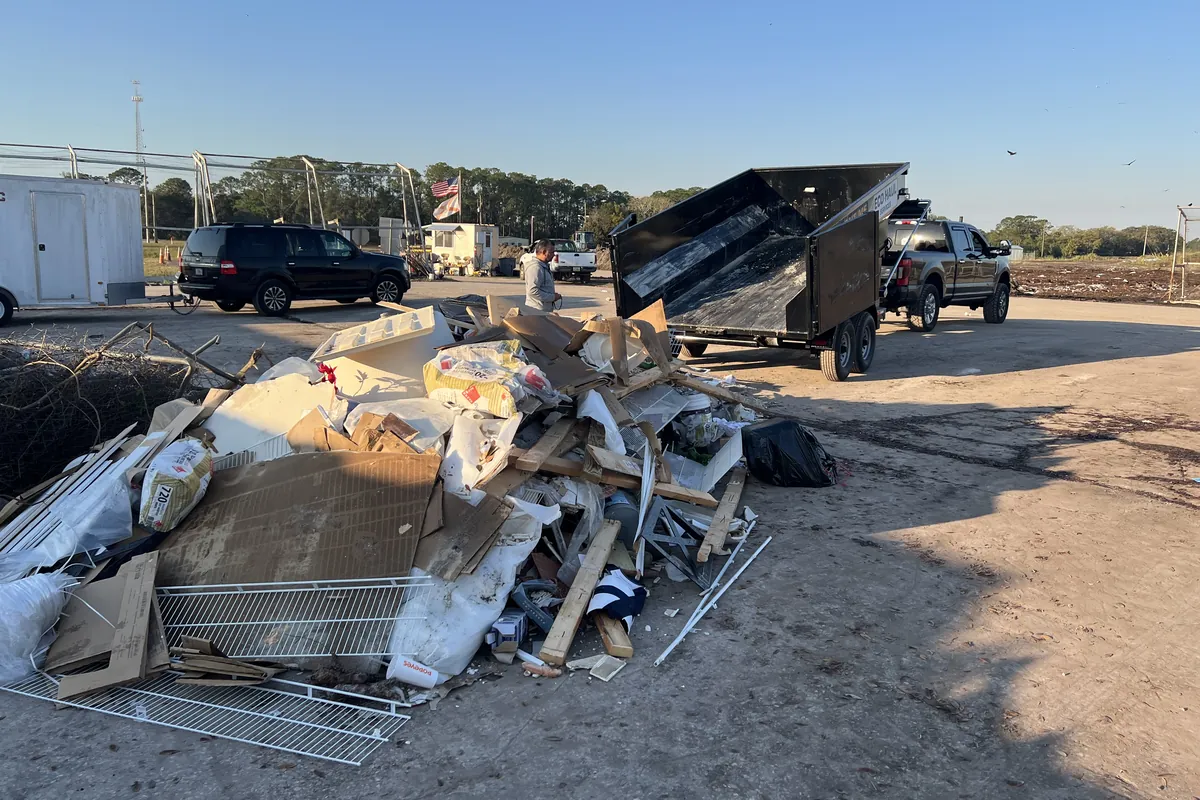
The city’s storm debris page is short and specific. Debris goes to the curb in four separate piles: bagged or bundled yard waste, meaning leaves and twigs; large vegetation such as stumps and big branches that cannot be bagged; construction debris, which the city lists as fencing, roofing, lumber, drywall, carpet and furniture; and appliances such as refrigerators, washers, dryers and water heaters, with refrigerators emptied of food and their doors secured or taken off. Keep the piles away from mailboxes, fire hydrants, storm drains and utility poles, and do not block the sidewalk or the street.
The city then tells you what it will leave behind, and this is the part to read twice. Debris in backyards, driveways or behind fences will not be collected. Debris mixed with household garbage will not be collected. And contractors hired for yard work or repairs must haul away the debris they generate, which means the roofer’s tear off and the tree company’s logs are not the city’s problem. The stated timeline is collection within about six weeks.
If your address says Orlando, check that you are actually inside city limits. A large share of “Orlando” is unincorporated Orange County, which runs a different program.
Orange County’s rule is one sentence. Vegetative storm debris should always be separated from storm-related construction debris, and household garbage should never be mixed with either. Mixed piles are the reason a load gets skipped. The county states outright that if vegetative and construction debris are not separated, neither will be picked up. The county also warns that yard waste collection can fall behind schedule after a storm and that it could take several passes for all materials to be picked up.
Gated and private communities have their own section, because the county’s trucks do not drive private roads by default. The county lays out four options for associations: regular curbside service where it applies, a county letter for disposal at a designated drop-off site, placing the debris on the public right of way outside the community’s property line, or a roll off placed in a location the county designates when there is no room at the gate. Communities approved after February 2009 are also required by county code to keep funds for storm debris. And the county states plainly that debris will be removed from private property only in the case of severe damage, per FEMA policy. Public Works answers at 407-836-3111, or 311.
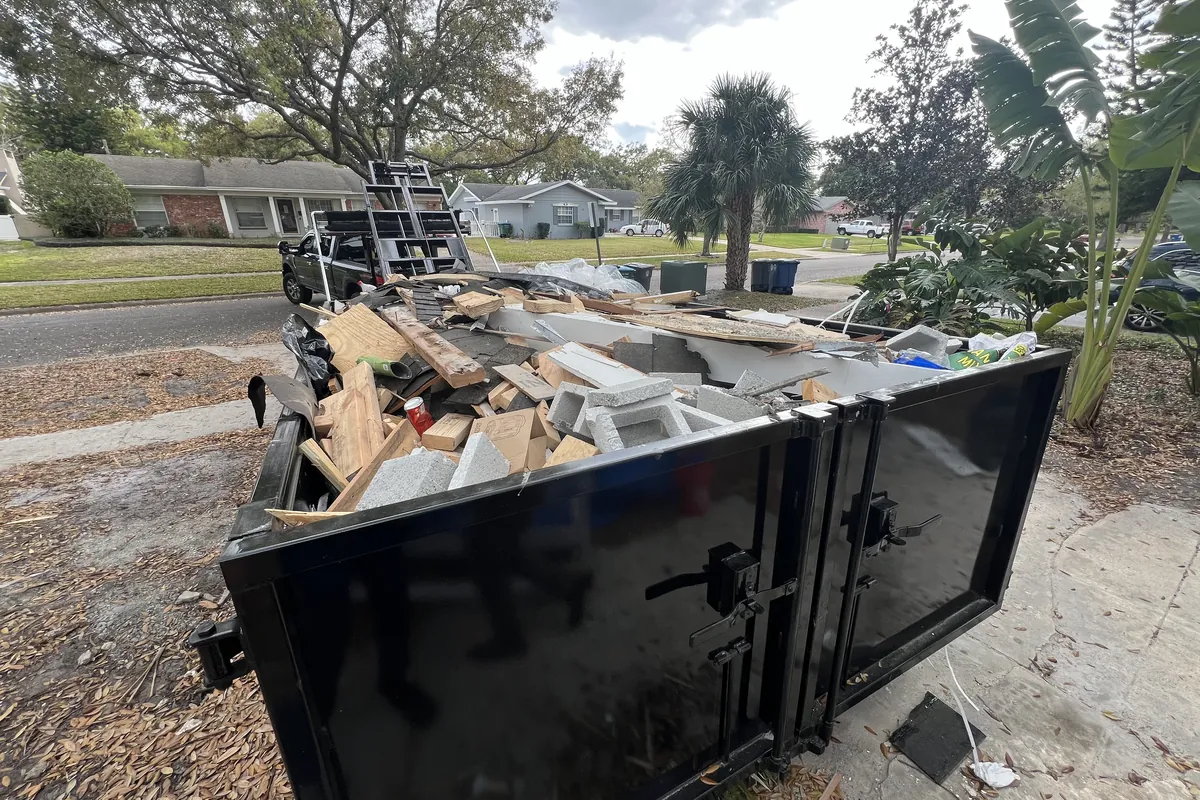
Winter Park’s approach after Hurricane Milton in October 2024 is the clearest example of how a smaller city handles it. The city’s contractor, Waste Pro, picked up only properly bagged, containerized and bundled debris, nothing over 50 pounds, on three announced dates, up to 15 bags or bundles, which the city equated to three cubic yards. Loose piles of large tree debris had to be set separately at the curb for contractors with heavier equipment, and the city said outright that those piles would take much longer because most contract crews were helping harder hit areas after Helene and Milton. The same notice said no construction debris would be collected, and it repeated the placement rules: nothing near trees, poles, hydrants or meters, nothing in the street, nothing on top of a storm drain.
Seminole County, home to Altamonte Springs, Oviedo, Casselberry, Winter Springs, Longwood, Lake Mary and Sanford, asks residents to sort into five categories: household garbage, household hazardous waste such as motor oil and batteries, vegetation, white goods such as refrigerators and washers, and what the county calls orphan containers, meaning propane tanks and chlorine cylinders. For private roads the county is direct. Debris there may not be eligible for FEMA public assistance, and associations are asked to file a Right of Entry form before a storm. The county adds that signing the form “does not guarantee debris removal services.” Inside those seven cities the city runs its own collection; the county’s curbside service covers the unincorporated areas. Questions go to 407-665-5102.
Across the four jurisdictions the same items fall through, and they are the ones people call us about.
That list explains why the curb pile does not shrink. The programs are built around a pile you can carry to the curb and sort into their categories, not around the flooded bedroom you have not gutted yet, the pool screen still hanging off the frame, or the fence lying in the back yard. Florida’s environmental agency says it in one line. Private property owners are responsible for removing debris from their own property.
FEMA’s own answer is that debris removal from private property is eligible only in limited circumstances, when the debris threatens public health and safety or the community’s economic recovery, and only in specific areas the government designates. The removal has to be in the public interest, not a benefit to one household. In plain terms, do not plan a cleanup around a FEMA reimbursement.
Insurance is a question for your agent, and the honest answer is that policies differ on what they pay for debris. What every Florida homeowner should know before writing a check is the hurricane deductible. As a rule, insurers must offer hurricane deductible options of 2 percent, 5 percent or 10 percent of the dwelling limit, plus a $500 option on smaller policies, and the deductible applies on an annual basis to all covered hurricane losses in the calendar year as long as you stay with the same insurer or insurer group. On a home insured for $350,000 the $500 option is not required, so 2 percent is the lowest option the law makes the insurer offer, and that is the first $7,000 of hurricane damage out of pocket. A debris bill often sits inside that number. Call the agent first, keep the receipts, and photograph the pile before it moves.
If the curb program covers your pile and you can wait, use it. The curb programs do not bill you separately for storm debris. The dumpster and the crew are for the rest.
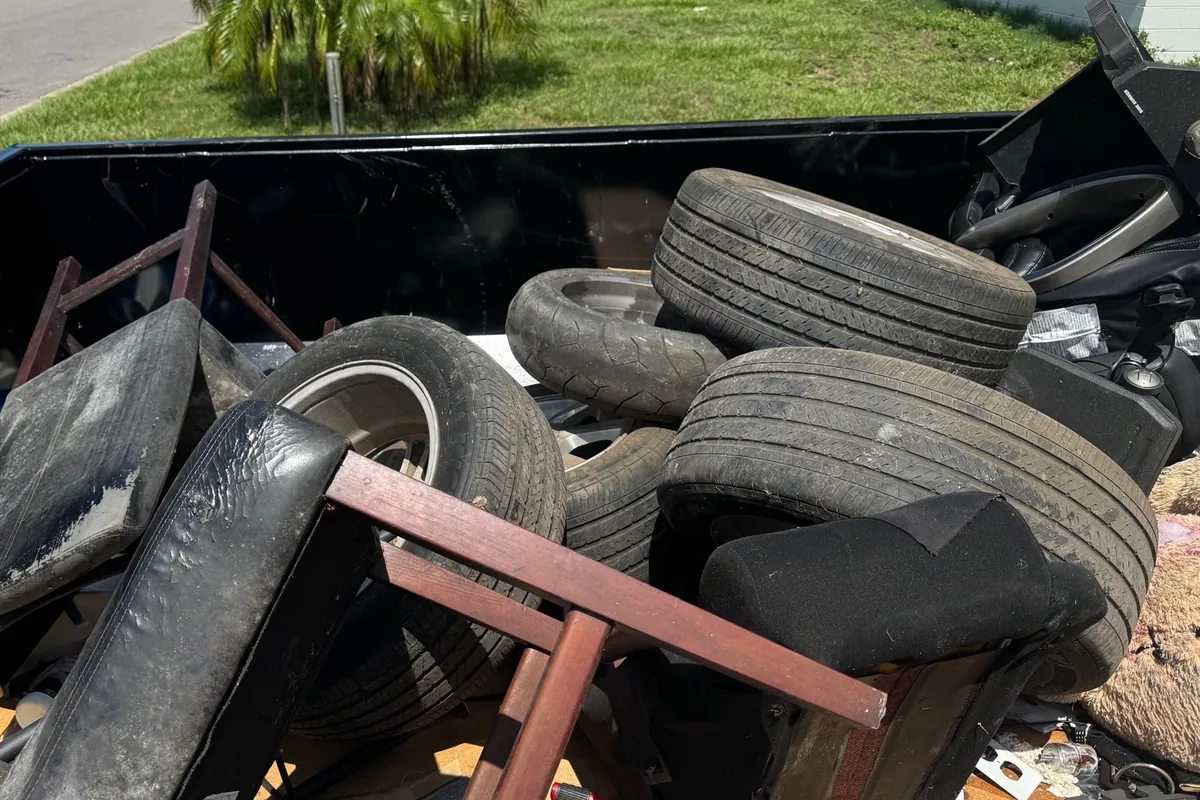
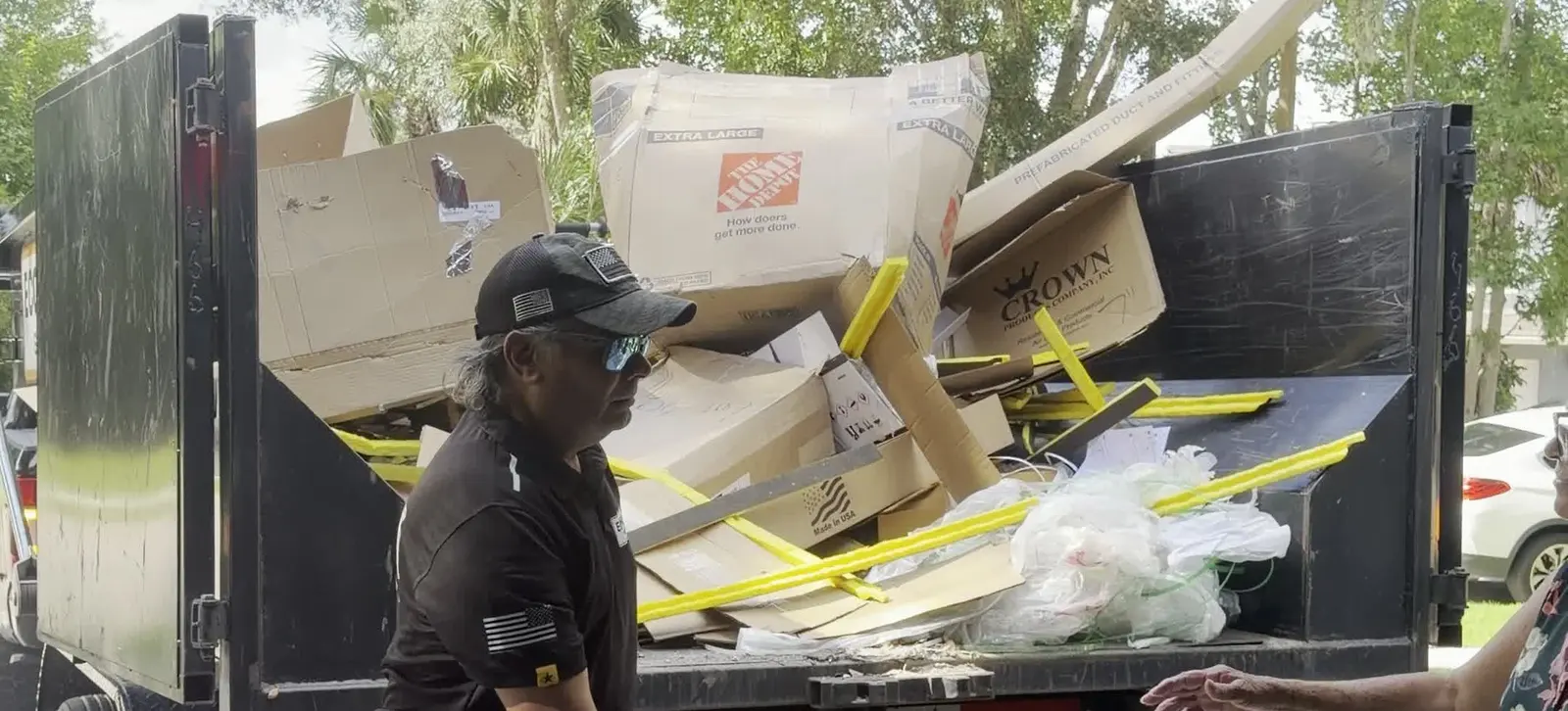
A 14 yard dumpster in the driveway is the tool when the pile is big, mixed, or behind the house. Branches, fencing, drywall, wet carpet, roofing and ruined furniture all go in, you load on your own schedule, and delivery and pickup are included. Every plan includes disposal weight, one ton on the 1, 3 and 30 day plans and two tons on the 7 day plan, and storm debris is heavy, so tell us what you are loading and we will tell you which plan fits before the container arrives. We say that before you book, not on the invoice.
A junk removal crew is the tool when you do not want to lift anything, when the job is a flooded room rather than a yard, or when there are appliances. Refrigerators, freezers and air conditioners cannot go in the dumpster, because Florida bans white goods from landfills and federal rules require the refrigerant to be recovered before the appliance is disposed of, with the right recovery equipment and a signed record of who did it. They ride on the truck to a proper facility instead. The crew sorts what it hauls, and what still works gets donated rather than buried.
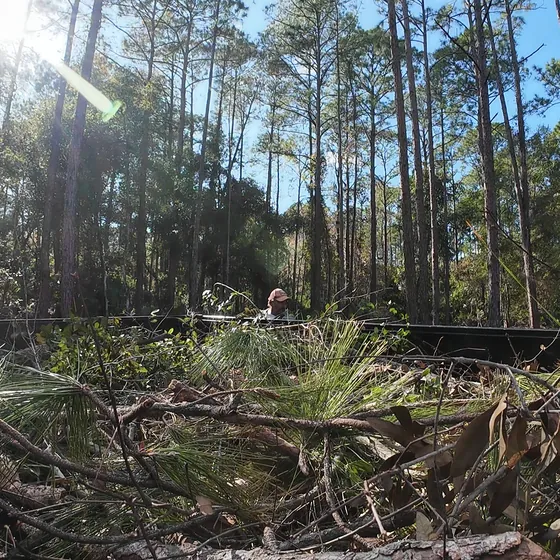
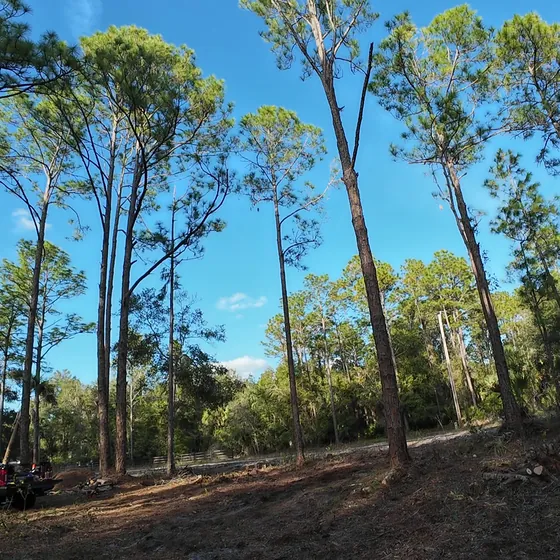
One thing we will not do is promise a delivery window during the week after a landfall. Demand spikes, roads close, and the landfills queue. Call early, tell us what you have and where you are, and we will give you a real date and a real price. Everything is on the pricing page, or call (407) 904-5577.
Eco Haul Services rents dumpsters and hauls junk in Winter Park, Orlando and 22 other Central Florida communities. Program rules above are each government’s as published in September 2026; after a declared storm, check their pages for the current pass schedule.
Usually not. FEMA says debris removal from private property is eligible only in limited circumstances, when the debris threatens public health and safety or the community's recovery and the government designates specific areas. Curbside pickup by your city or county is the program that reaches most homeowners.
The City of Orlando sorts it into four piles: bagged or bundled yard waste, large vegetation such as stumps and big branches, construction debris such as fencing, roofing, lumber, drywall, carpet and furniture, and appliances. Household garbage is not storm debris, and a pile that mixes them will not be collected.
The City of Orlando tells residents to expect collection within about six weeks, and Orange County warns that it can take several passes. After Hurricane Milton in 2024, Winter Park's contractor ran pickups limited to bagged, containerized and bundled debris on set dates and said loose piles would take much longer because crews were shared with harder hit areas.
Call your agent before you pay anyone, because policies differ. What is certain in Florida is that a hurricane deductible applies to hurricane losses. As a rule, insurers must offer hurricane deductibles of 2 percent, 5 percent or 10 percent of the dwelling limit, plus a $500 option on smaller policies, and the deductible applies on an annual basis to all covered hurricane losses in the calendar year as long as you stay with the same insurer or insurer group.
Yes, and it is the fastest way to clear a yard or a damaged room when you do not want to wait for the county's passes. Branches, fencing, drywall, roofing and furniture all go in. Refrigerators and other appliances go on our truck instead, because Florida bans them from landfills and the refrigerant has to be recovered first.
Keep reading
The three clocks of an estate cleanout in Central Florida: who has authority, what the law protects, where things go and what our crew and dumpster cost.
Read the guideOrange and Seminole bill haulers by the ton. We price by the space your load fills. What the minimum covers, what raises the price and what is left out.
Read the guideFlorida law, the market for each material and your county program decide where a sofa, a fridge or a mattress ends up. The real route, with the rules.
Read the guideTell us what you have and where you are. We will come back with a price, not a runaround.